


-
-
유방 질환 학회 Suggestion of BRCA1 c.5339T>C (p.L1780P) variant confer from 'unknown significance' to 'Likely pathogenic' based on clinical evidence in Korea 2017.06.15.Breast . 2017 Jun;33:109-116 논문 보기PurposeWe describe a rationale for the re-classification of the BRCA1 c.5539T>C (L1780P) variant using a clinical evidence.MethodsA retrospective review was conducted to identify all patients with breast or ovarian cancer and the L1780P variant between 2002 and 2015 at a single institution.ResultsWe identified the BRCA1/2 genetic mutation test results of 1223 breast cancer patients and 174 patients with ovarian cancer. Of the 160 BRCA 1/2 variant unknown significance, 16 (10.0%) patients were identified as having the L1780P variant. Among them, 10 had breast cancer, 4 had ovarian cancer, and 2 had both breast and ovarian cancer. Thirteen (81.3%) patients with this variant had family histories of breast or ovarian cancer. Two (16.7%) also had comorbid ovarian cancer. Two patients with this variant showed that co-segregation of the disease in multiple family members and family histories of breast and ovarian cancer. This variant was found to be either absent or at extremely low frequency in general population databa
ses. ConclusionsThe L1780P variant might confer to "Likely pathogenic" according to a clinical evidence and the ACMG standards and guidelines. A nation-wide or global survey and a functional analysis are needed to confirm the pathogenicity of the L1780P variant.
Total : 35개 (page : 1/3)
-
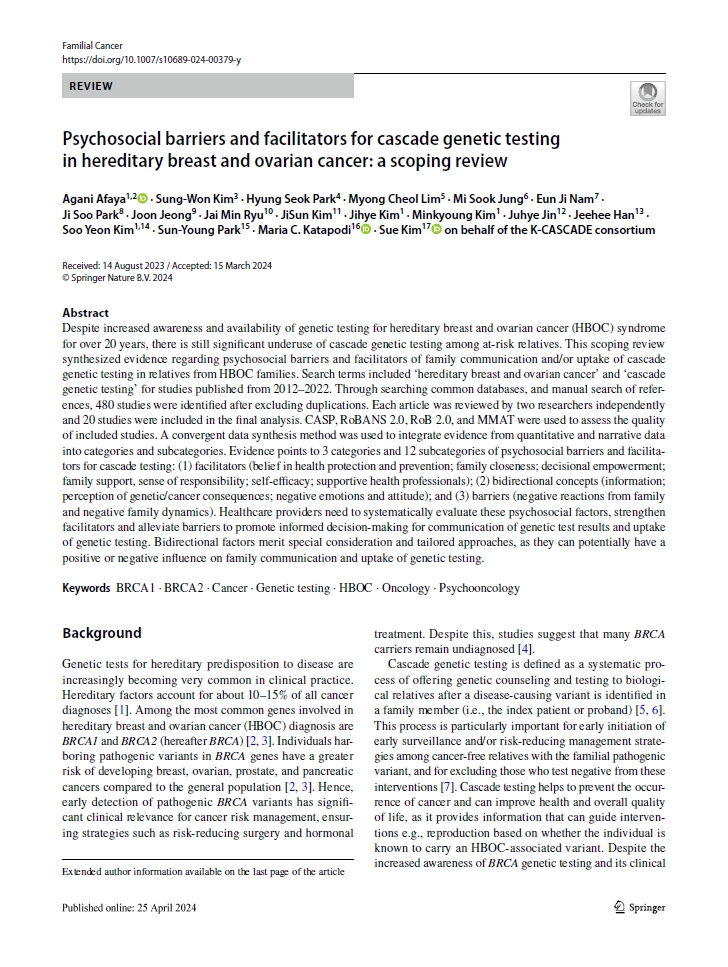 Psychosocial barriers and facilitators for cascade genetic testing in hereditary breast and ovarian cancer: a scoping review
-
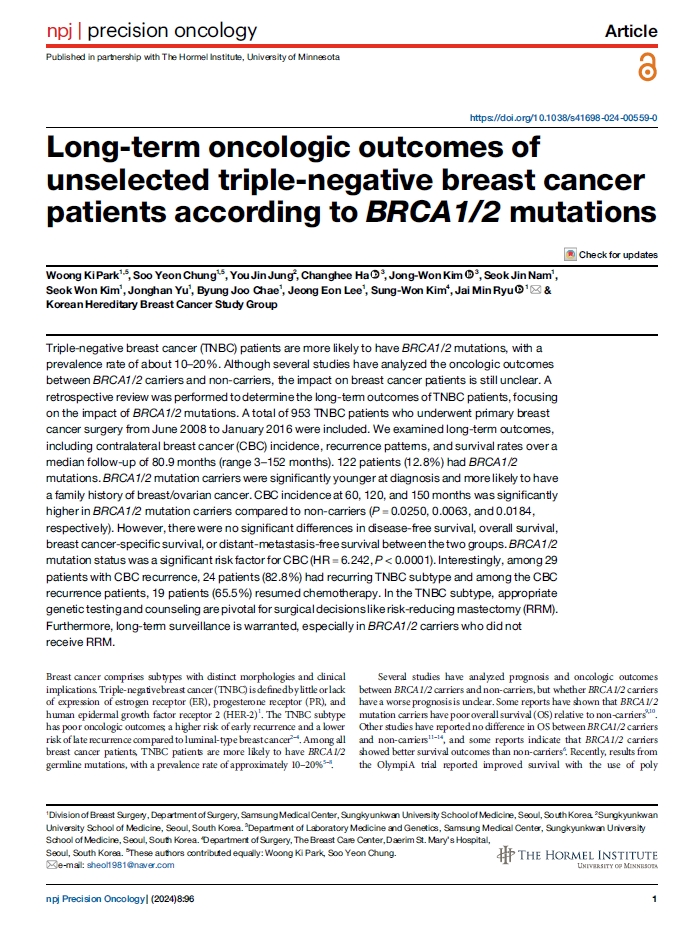 Long-term oncologic outcomes of unselected triple-negative breast cancer patients according to BRCA1/2 mutations
-
Associations of a Breast Cancer Polygenic Risk Score With Tumor Characteristics and Survival
-
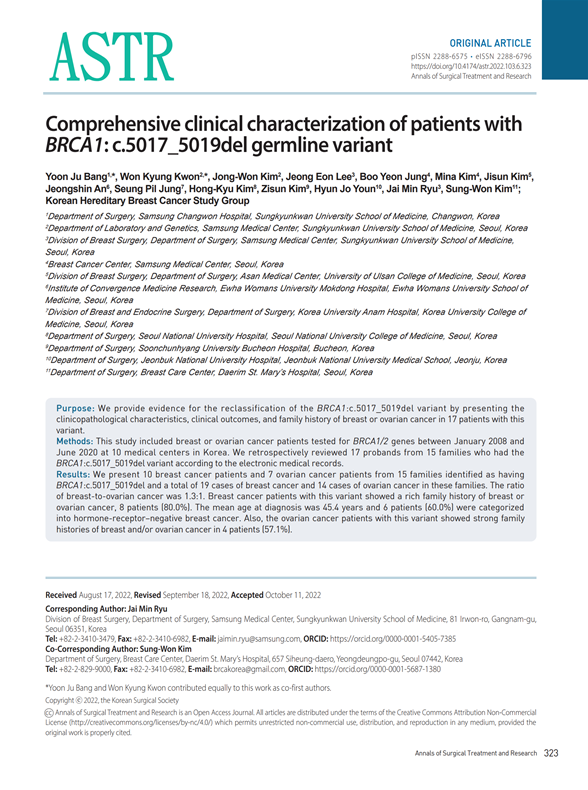 Comprehensive clinical characterization of patients with BRCA1: c.5017_5019del germline variant
-
 BRCA and Breast Cancer-Related High-Penetrance Genes
-
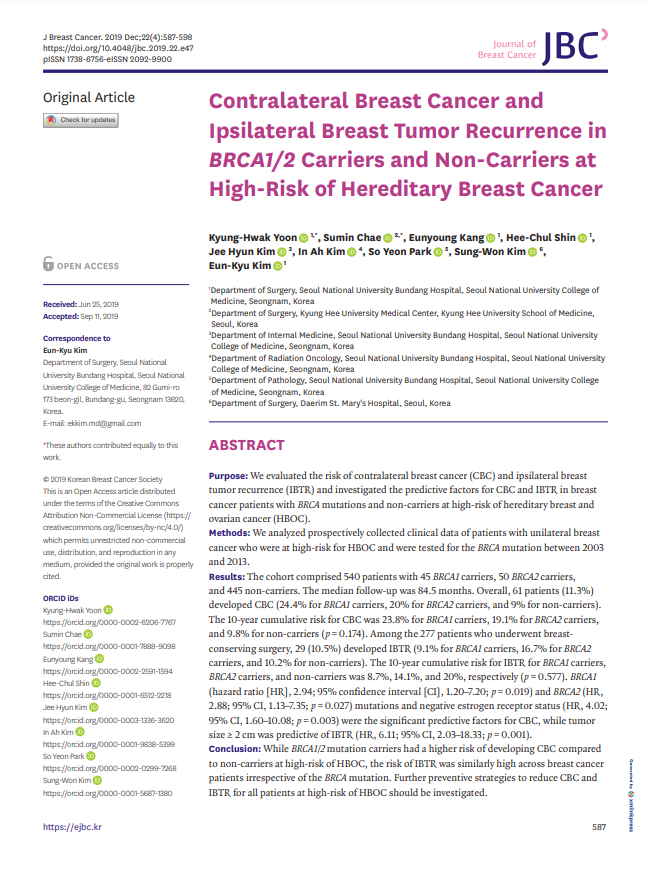 Contralateral Breast Cancer and Ipsilateral Breast Tumor Recurrence in BRCA1/2 Carriers and Non-Carriers at High-Risk of Hereditary Breast Cancer
-
 The functional ALDH2 polymorphism is associated with breast cancer risk: A pooled analysis from the Breast Cancer Association Consortium
-
 Height and body mass index as Modifiers of breast cancer risk in BRCA1/2 mutation carriers: A Mendelian randomization study
-
 Prevalence and oncologic outcomes of BRCA 1/2 mutations in unselected triple-negative breast cancer patients in Korea
-
 Development of a Management Algorithm for the Diagnosis of Cellular Fibroepithelial Lesions From Core Needle Biopsies
-
 Reclassification of BRCA1 and BRCA2 variants of uncertain significance: a multifactorial analysis of multicentre prospective cohort
-
 BRCA1/2-negative, high-risk breast cancers (BRCAX) for Asian women: genetic susceptibility loci and their potential impacts
-
 Impact of Nodule Size on Malignancy Risk Differs according to the Ultrasonography Pattern of Thyroid Nodules
-
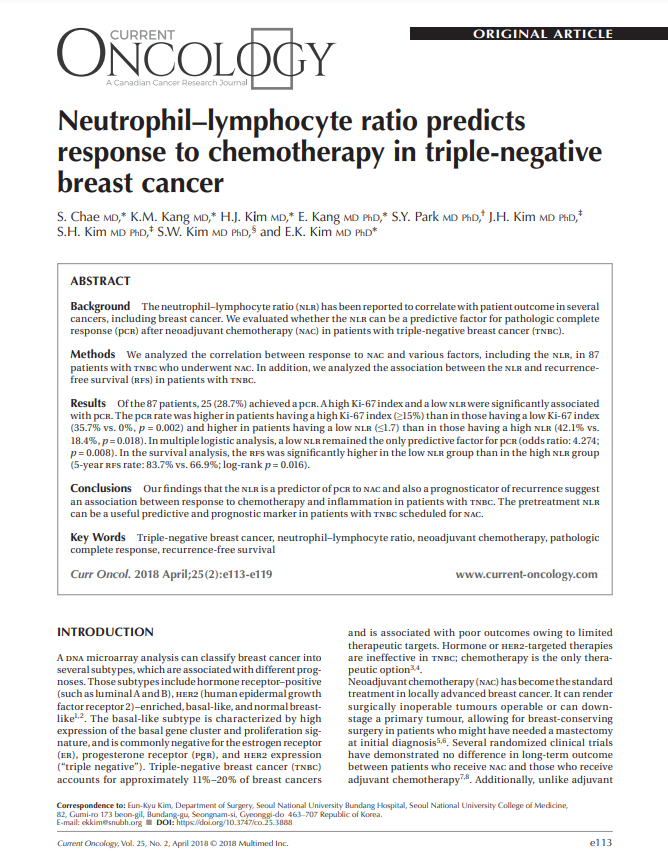 Neutrophil–lymphocyte ratio predicts response to chemotherapy in triple-negative breast cancer
-
 Identification of ten variants associated with risk of estrogen-receptor-negative breast cancer


