


-
-
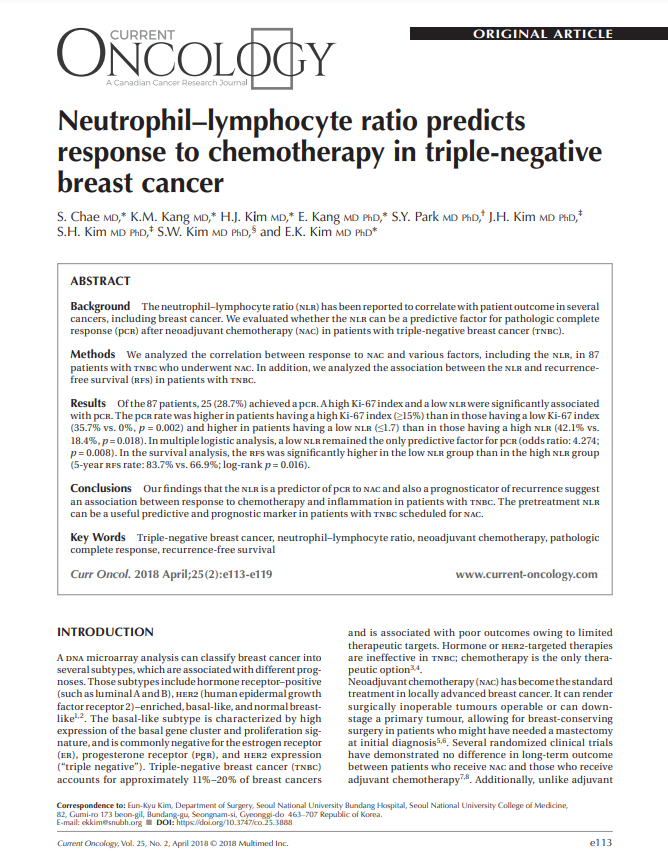
Current Oncology Neutrophil–lymphocyte ratio predicts response to chemotherapy in triple-negative breast cancer 2018.04.25.Curr Oncol. 2018 Apr; 25(2): e113–e119. 논문 보기PurposeThe neutrophil–lymphocyte ratio (nlr) has been reported to correlate with patient outcome in several cancers, including breast cancer. We evaluated whether the nlr can be a predictive factor for pathologic complete response (pcr) after neoadjuvant chemotherapy (nac) in patients with triple-negative breast cancer (tnbc).MethodsWe analyzed the correlation between response to nac and various factors, including the nlr, in 87 patients with tnbc who underwent nac. In addition, we analyzed the association between the nlr and recurrencefree survival (rfs) in patients with tnbc.ResultsOf the 87 patients, 25 (28.7%) achieved a pcr. A high Ki-67 index and a low nlr were significantly associated with pcr. The pcr rate was higher in patients having a high Ki-67 index (≥15%) than in those having a low Ki-67 index (35.7% vs. 0%, p = 0.002) and higher in patients having a low nlr (≤1.7) than in those having a high nlr (42.1% vs. 18.4%, p = 0.018). In multiple logistic analysis, a low nlr remained the only predictive factor for pcr (odds ratio: 4.274; p = 0.008). In the survival analysis, the rfs was significantly higher in the low nlr group than in the high nlr group (5-year rfs rate: 83.7% vs. 66.9%; log-rank p = 0.016).
Total : 35개 (page : 1/3)
-
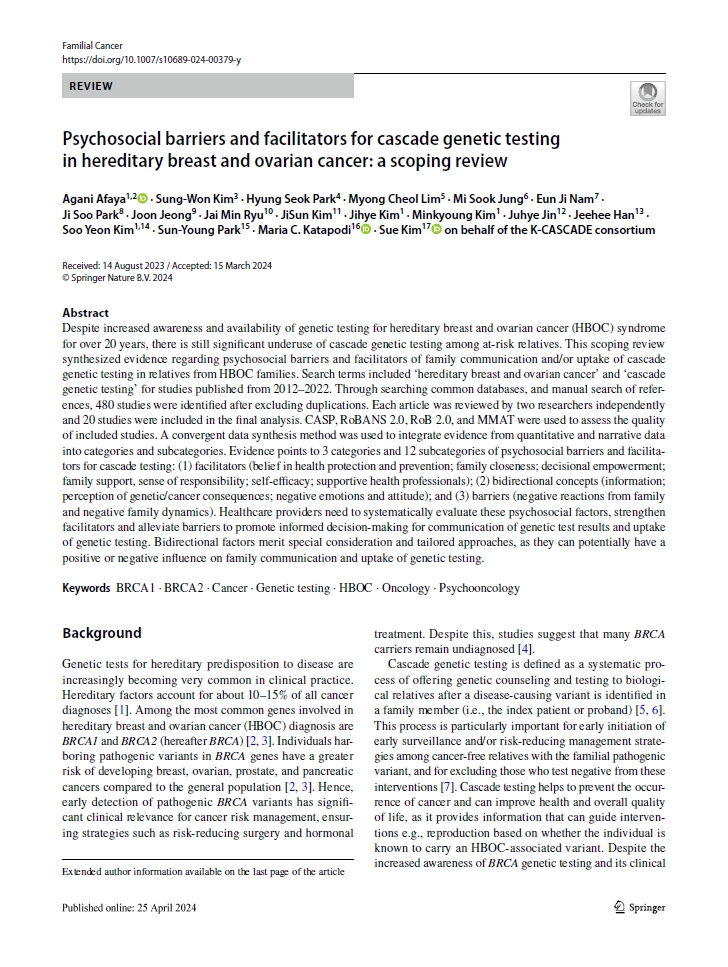 Psychosocial barriers and facilitators for cascade genetic testing in hereditary breast and ovarian cancer: a scoping review
-
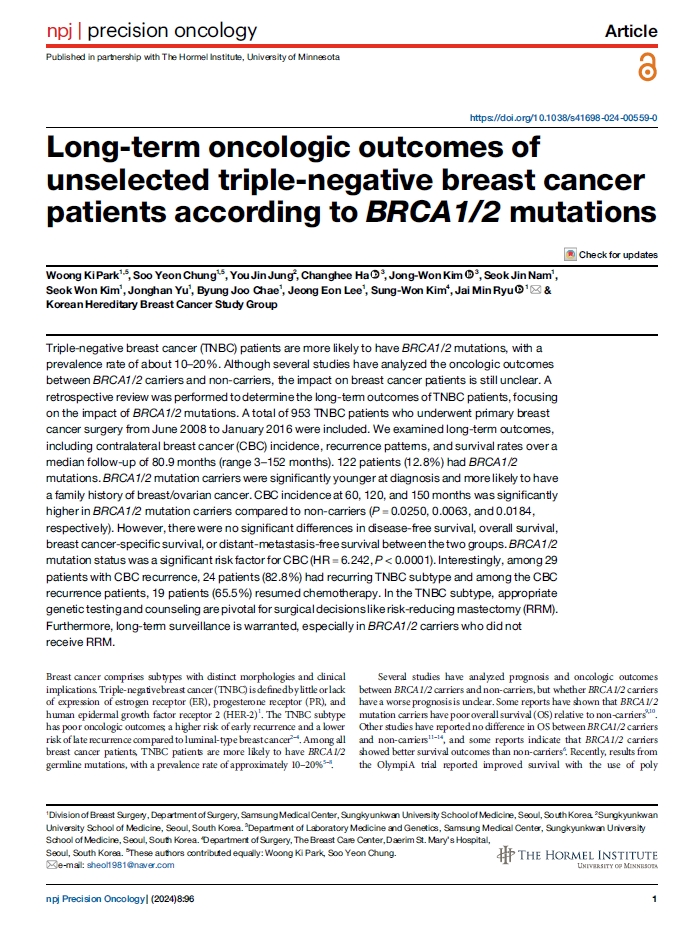 Long-term oncologic outcomes of unselected triple-negative breast cancer patients according to BRCA1/2 mutations
-
Associations of a Breast Cancer Polygenic Risk Score With Tumor Characteristics and Survival
-
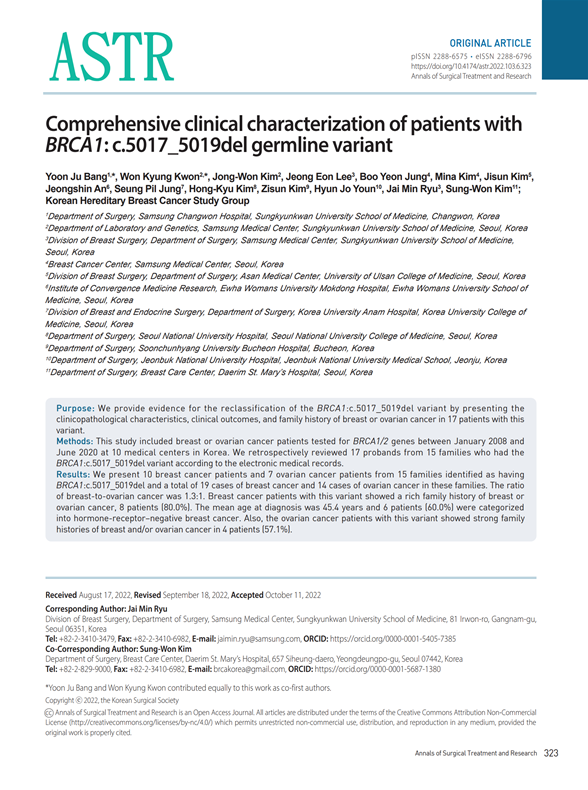 Comprehensive clinical characterization of patients with BRCA1: c.5017_5019del germline variant
-
 BRCA and Breast Cancer-Related High-Penetrance Genes
-
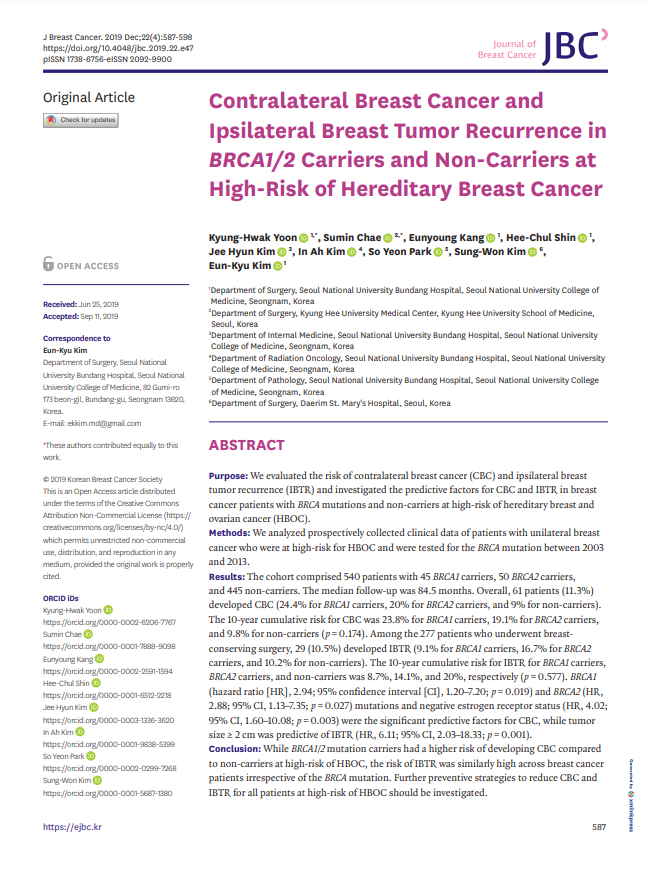 Contralateral Breast Cancer and Ipsilateral Breast Tumor Recurrence in BRCA1/2 Carriers and Non-Carriers at High-Risk of Hereditary Breast Cancer
-
 The functional ALDH2 polymorphism is associated with breast cancer risk: A pooled analysis from the Breast Cancer Association Consortium
-
 Height and body mass index as Modifiers of breast cancer risk in BRCA1/2 mutation carriers: A Mendelian randomization study
-
 Prevalence and oncologic outcomes of BRCA 1/2 mutations in unselected triple-negative breast cancer patients in Korea
-
 Development of a Management Algorithm for the Diagnosis of Cellular Fibroepithelial Lesions From Core Needle Biopsies
-
 Reclassification of BRCA1 and BRCA2 variants of uncertain significance: a multifactorial analysis of multicentre prospective cohort
-
 BRCA1/2-negative, high-risk breast cancers (BRCAX) for Asian women: genetic susceptibility loci and their potential impacts
-
 Impact of Nodule Size on Malignancy Risk Differs according to the Ultrasonography Pattern of Thyroid Nodules
-
Neutrophil–lymphocyte ratio predicts response to chemotherapy in triple-negative breast cancer
-
 Identification of ten variants associated with risk of estrogen-receptor-negative breast cancer


