


-
-
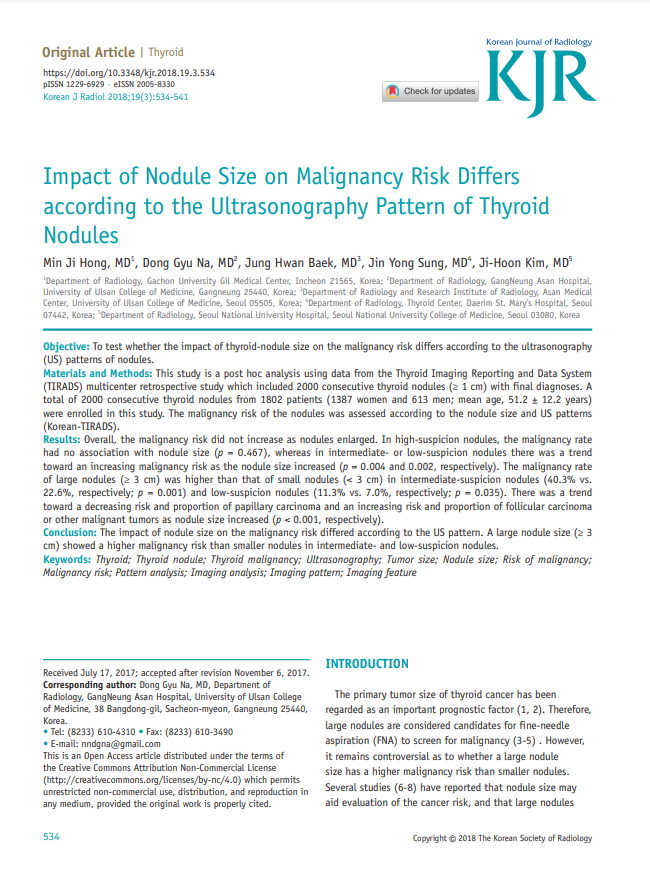
Korean Journal of Radiology Impact of Nodule Size on Malignancy Risk Differs according to the Ultrasonography Pattern of Thyroid Nodules 2018.05.19.Korean J Radiol. May-Jun 2018;19(3):534-541. 논문 보기PurposeTo test whether the impact of thyroid-nodule size on the malignancy risk differs according to the ultrasonography (US) patterns of nodules.MethodsThis study is a post hoc analysis using data from the Thyroid Imaging Reporting and Data System (TIRADS) multicenter retrospective study which included 2000 consecutive thyroid nodules (≥ 1 cm) with final diagnoses. A total of 2000 consecutive thyroid nodules from 1802 patients (1387 women and 613 men; mean age, 51.2 ± 12.2 years) were enrolled in this study. The malignancy risk of the nodules was assessed according to the nodule size and US patterns (Korean-TIRADS).ResultsOverall, the malignancy risk did not increase as nodules enlarged. In high-suspicion nodules, the malignancy rate had no association with nodule size (p = 0.467), whereas in intermediate- or low-suspicion nodules there was a trend toward an increasing malignancy risk as the nodule size increased (p = 0.004 and 0.002, respectively). The malignancy rate of large nodules (≥ 3 cm) was higher than that of small nodules (< 3 cm) in intermediate-suspicion nodules (40.3% vs. 22.6%, respectively; p = 0.001) and low-suspicion nodules (11.3% vs. 7.0%, respectively; p = 0.035). There was a trend toward a decreasing risk and proportion of papillary carcinoma and an increasing risk and proportion of follicular carcinoma or other malignant tumors as nodule size increased (p < 0.001, respectively).
Total : 35개 (page : 2/3)
-
 Association analysis identifies 65 new breast cancer risk loci
-
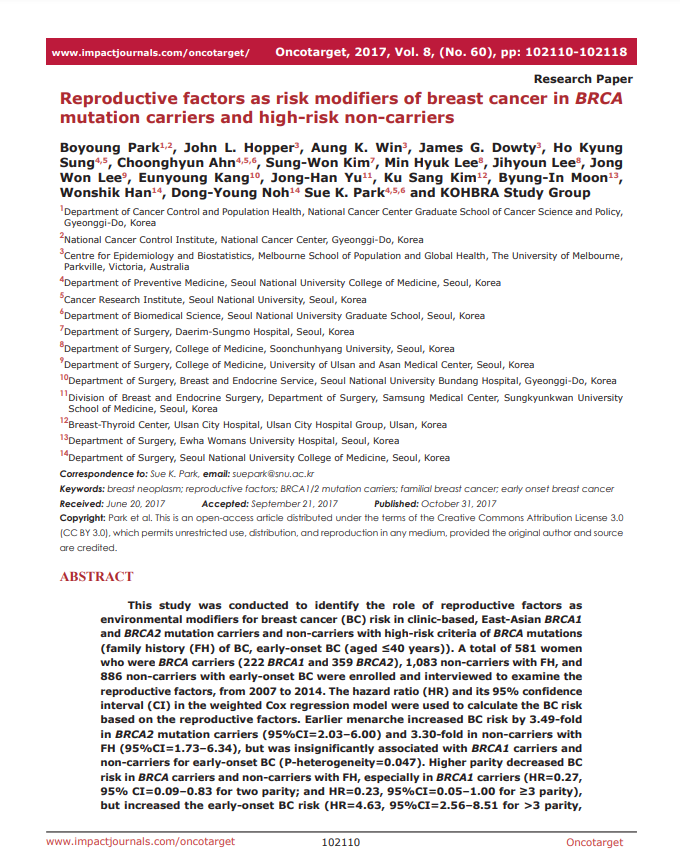 Reproductive factors as risk modifiers of breast cancer in BRCA mutation carriers and high risk
-
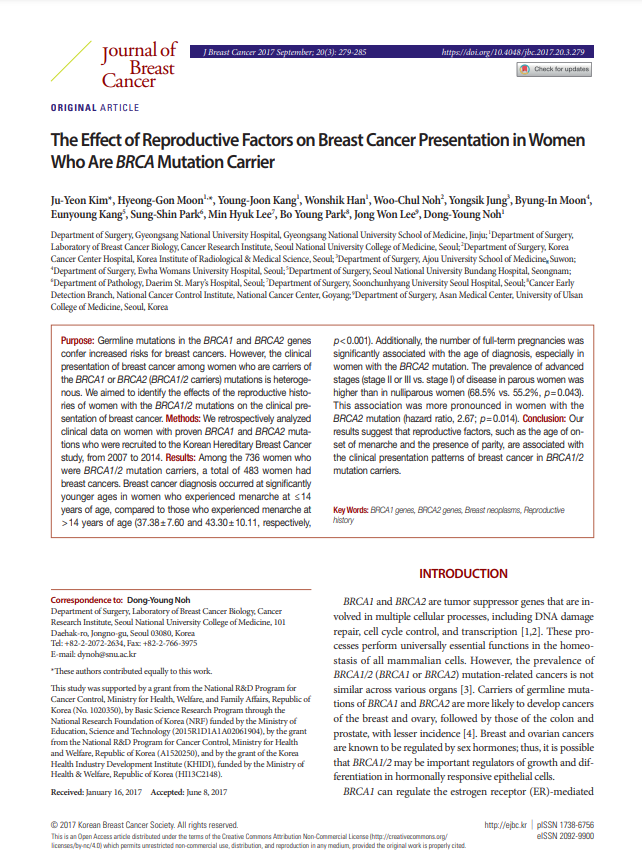 The Effect of Reproductive Factors on Breast Cancer Presentation in Women Who Are BRCA Mutation Carrier
-
 The Management Strategy of Benign Solitary Intraductal Papilloma on Breast Core Biopsy
-
 Prediction of Breast and Prostate Cancer Risks in Male BRCA1 and BRCA2 Mutation Carriers Using Polygenic Risk Scores
-
 Influence of the Angelina Jolie Announcement and Insurance Reimbursement on Practice Patterns for Hereditary Breast Cancer
-
 Suggestion of BRCA1 c.5339T>C (p.L1780P) variant confer from 'unknown significance' to 'Likely pathogenic' based on clinical evidence in Korea
-
 Identification of 12 new susceptibility loci for different histotypes of epithelial ovarian cancer
-
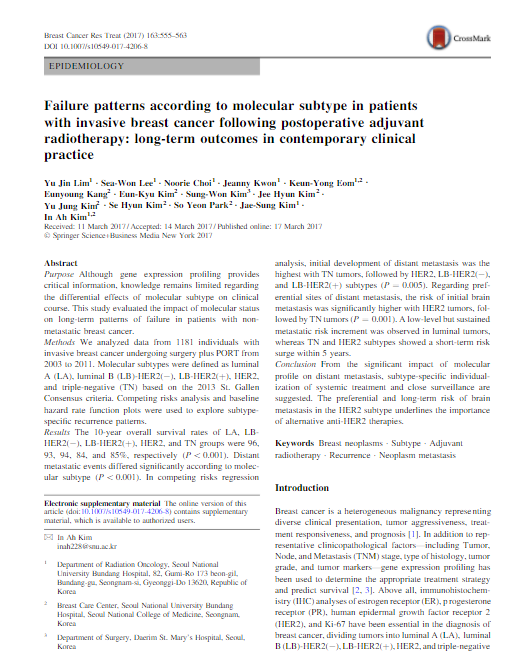 Failure patterns according to molecular subtype in patients with invasive breast cancer following postoperative adjuvant radiotherapy: long-term outcomes in contemporary clinical practice
-
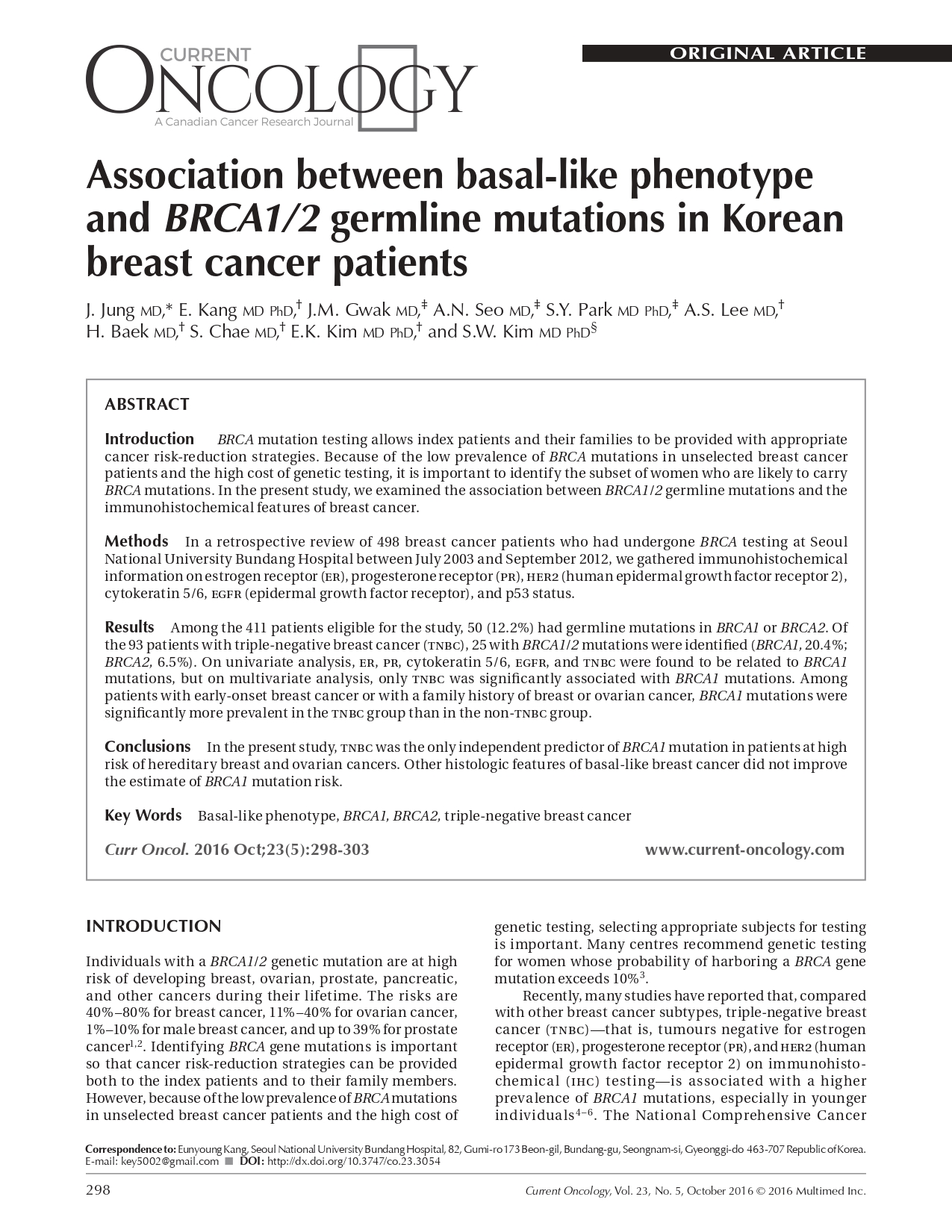 Association between basal-like phenotype and BRCA1/2 germline mutations in Korean breast cancer patients
-
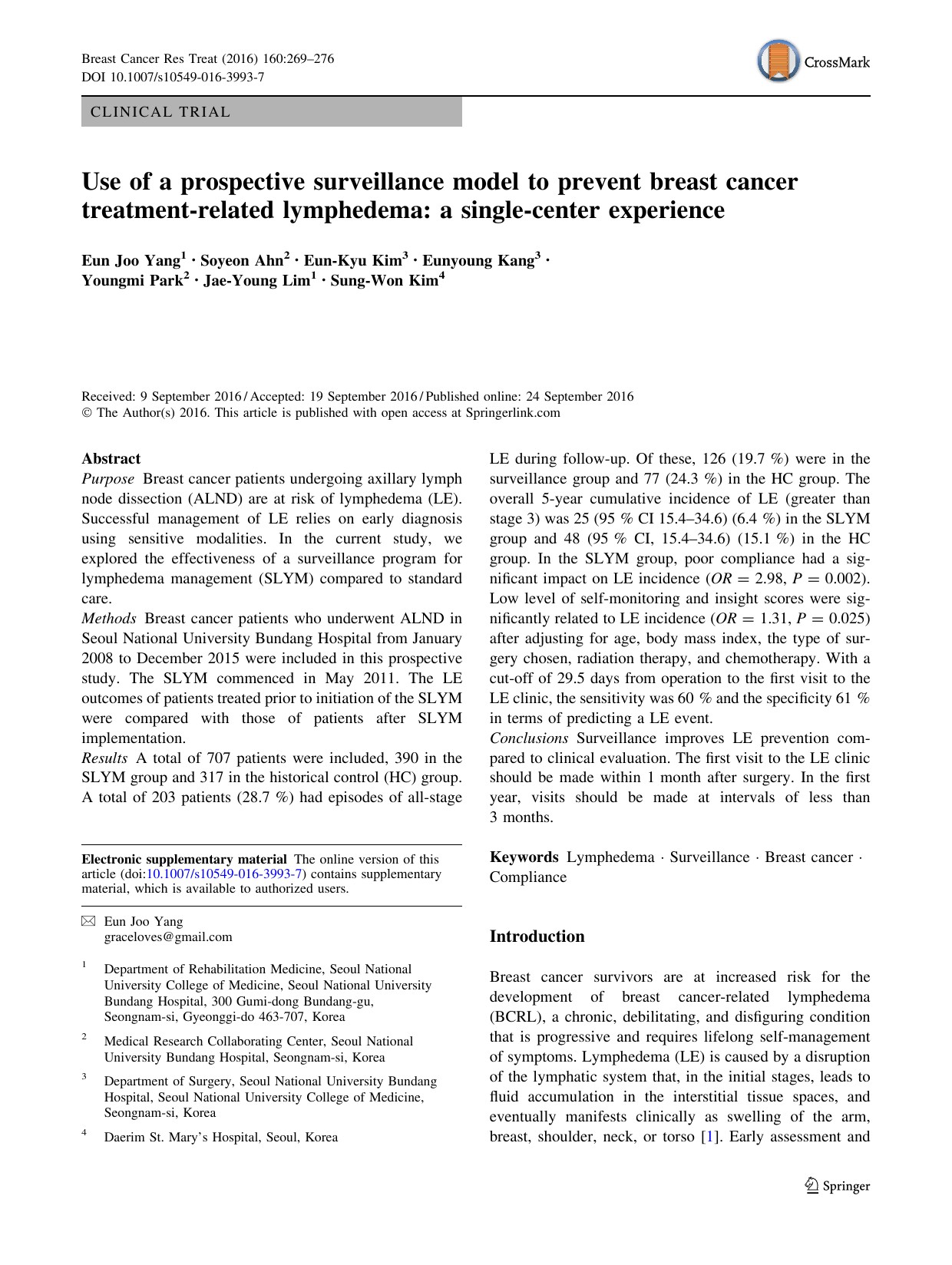 Use of a prospective surveillance model to prevent breast cancer treatment-related lymphedema: a single-center experience
-
 Reliability of Computer-Assisted Breast Density Estimation: Comparison of Interactive Thresholding, Semiautomated, and Fully Automated Methods
-
 An international survey of surveillance schemes for unaffected BRCA1 and BRCA2 mutation carriers
-
 Male breast cancer in BRCA1 and BRCA2 mutation carriers: pathology data from the Consortium of Investigators of Modifiers of BRCA1/2
-
 KOHBRA BRCA risk calculator (KOHCal): a model for predicting BRCA1 and BRCA2 mutations in Korean breast cancer patients


