


-
-
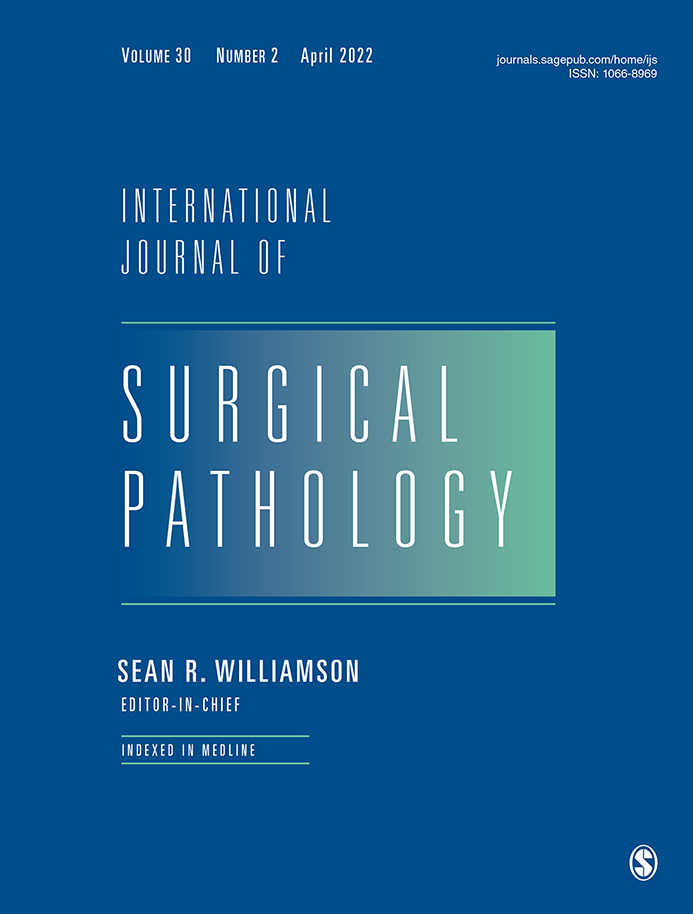
International Journal of Surgical Pathology Development of a Management Algorithm for the Diagnosis of Cellular Fibroepithelial Lesions From Core Needle Biopsies 2018.12.26.Int J Surg Pathol. 2018 Dec;26(8):684-692. 논문 보기PurposeSurgical excision is recommended for complete evaluation of cellular fibroepithelial lesions identified from core needle biopsy. The purpose of this study was to determine factors associated with phyllodes tumor among cellular fibroepithelial lesions from core biopsies and develop a scoring system to predict the risk of phyllodes tumor.MethodsWe retrospectively reviewed clinical data of 169 breast lesions that were diagnosed as cellular fibroepithelial lesions from core needle biopsy at the Seoul National University Bundang Hospital between March 2005 and January 2013. The clinical, histopathologic, and radiologic characteristics were compared between phyllodes tumors and fibroadenomas during the final diagnosis after surgical excision.ResultsOf the 169 lesions, 17 were observed and 152 were surgically removed. After excision, final pathology revealed 60 (39.5%) fibroadenomas and 92 (60.5%) phyllodes tumors. Multivariate analysis demonstrated that age (≥40 years), stromal overgrowth, and stromal cellularity were independent factors associated with phyllodes tumors. A scoring system was developed ba
sed on a multivariate logistic regression model, and the area under the receiver operating characteristic curve was 0.828 (95% confidence interval = 0.763-0.893).
Total : 35개 (page : 2/3)
-
 Association analysis identifies 65 new breast cancer risk loci
-
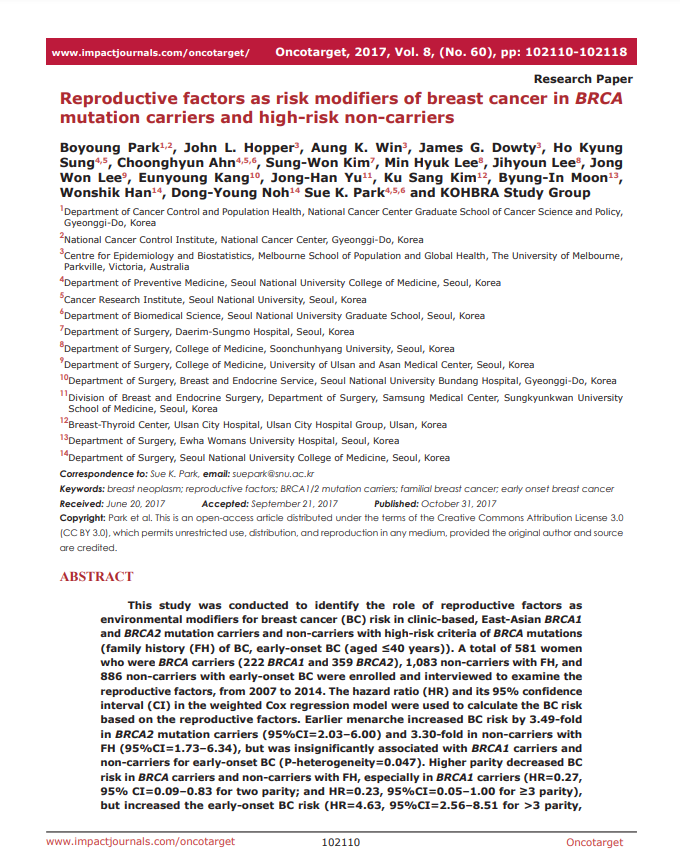 Reproductive factors as risk modifiers of breast cancer in BRCA mutation carriers and high risk
-
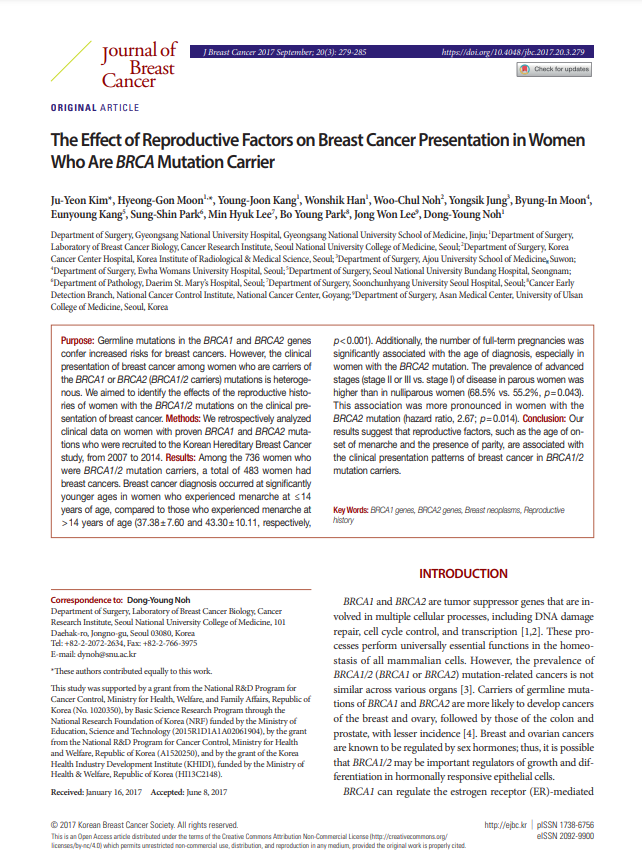 The Effect of Reproductive Factors on Breast Cancer Presentation in Women Who Are BRCA Mutation Carrier
-
 The Management Strategy of Benign Solitary Intraductal Papilloma on Breast Core Biopsy
-
 Prediction of Breast and Prostate Cancer Risks in Male BRCA1 and BRCA2 Mutation Carriers Using Polygenic Risk Scores
-
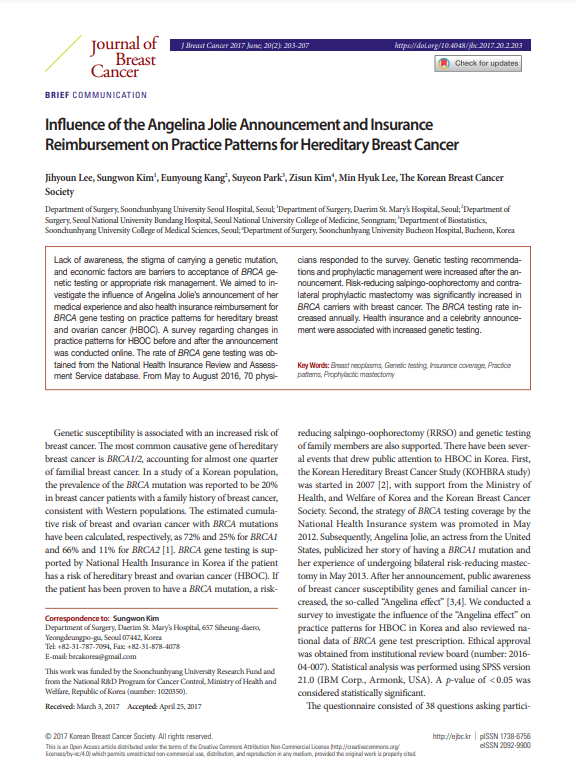 Influence of the Angelina Jolie Announcement and Insurance Reimbursement on Practice Patterns for Hereditary Breast Cancer
-
 Suggestion of BRCA1 c.5339T>C (p.L1780P) variant confer from 'unknown significance' to 'Likely pathogenic' based on clinical evidence in Korea
-
 Identification of 12 new susceptibility loci for different histotypes of epithelial ovarian cancer
-
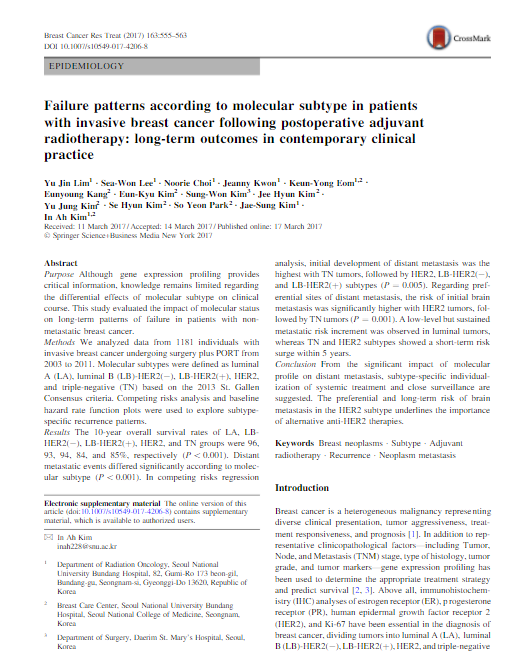 Failure patterns according to molecular subtype in patients with invasive breast cancer following postoperative adjuvant radiotherapy: long-term outcomes in contemporary clinical practice
-
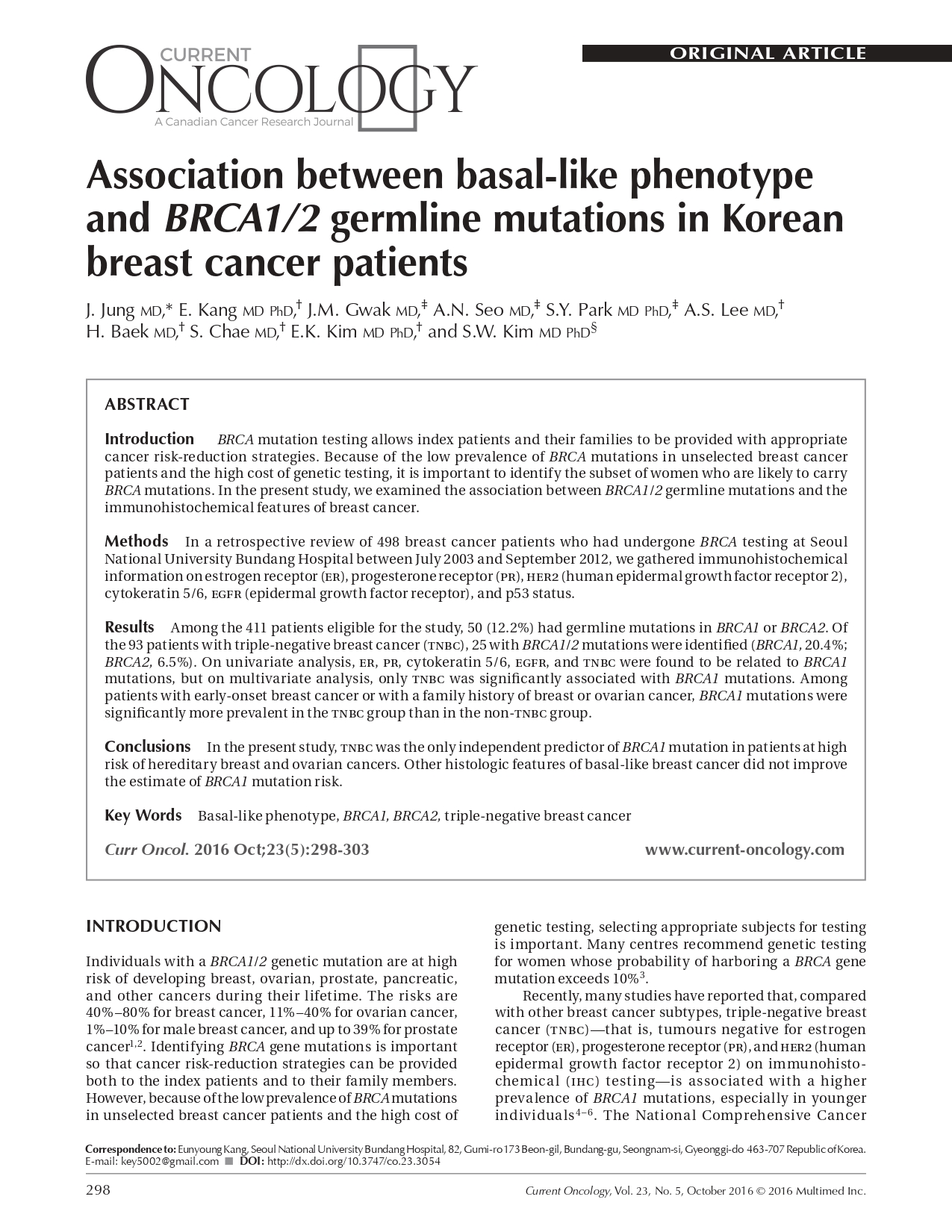 Association between basal-like phenotype and BRCA1/2 germline mutations in Korean breast cancer patients
-
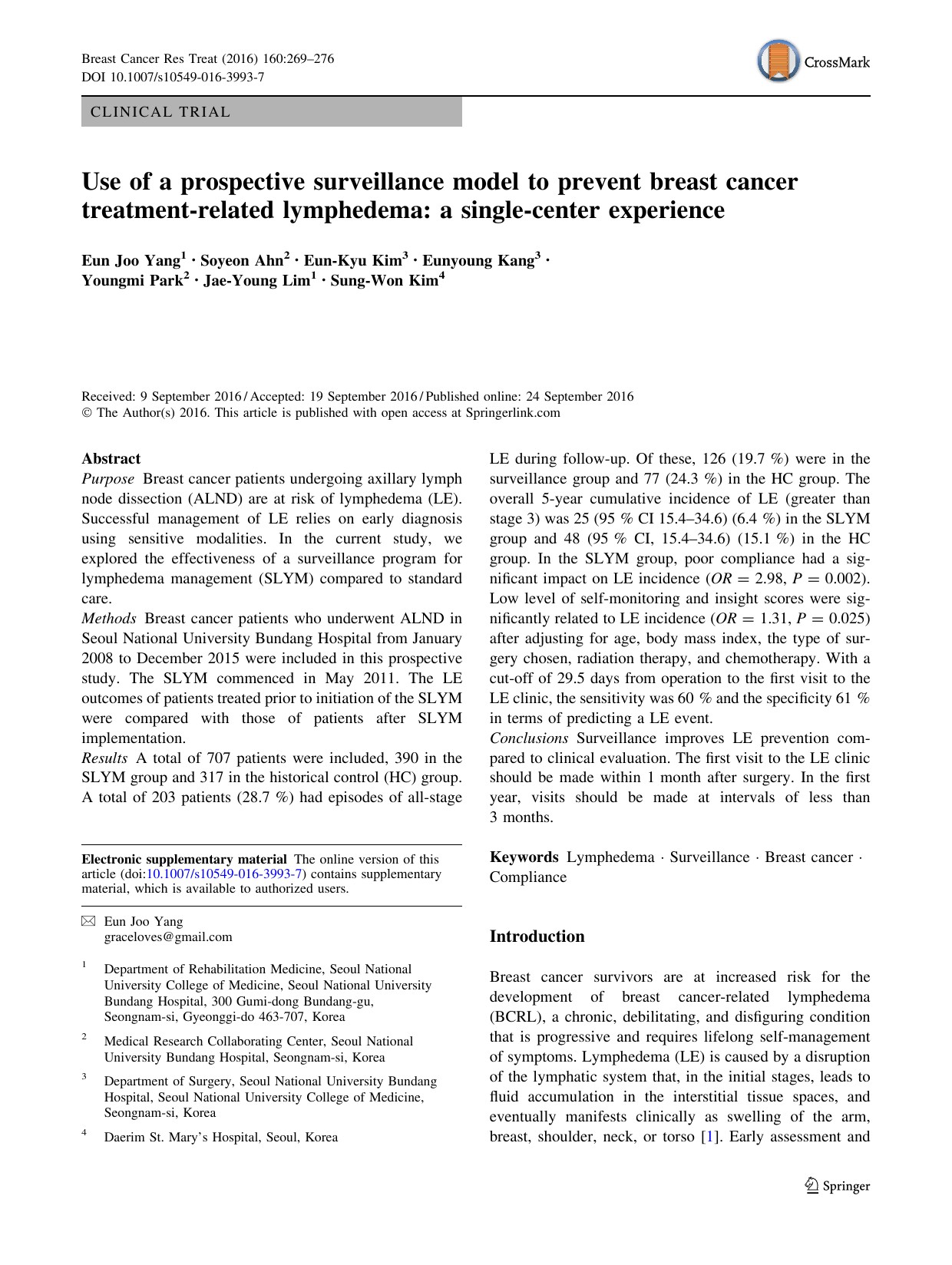 Use of a prospective surveillance model to prevent breast cancer treatment-related lymphedema: a single-center experience
-
 Reliability of Computer-Assisted Breast Density Estimation: Comparison of Interactive Thresholding, Semiautomated, and Fully Automated Methods
-
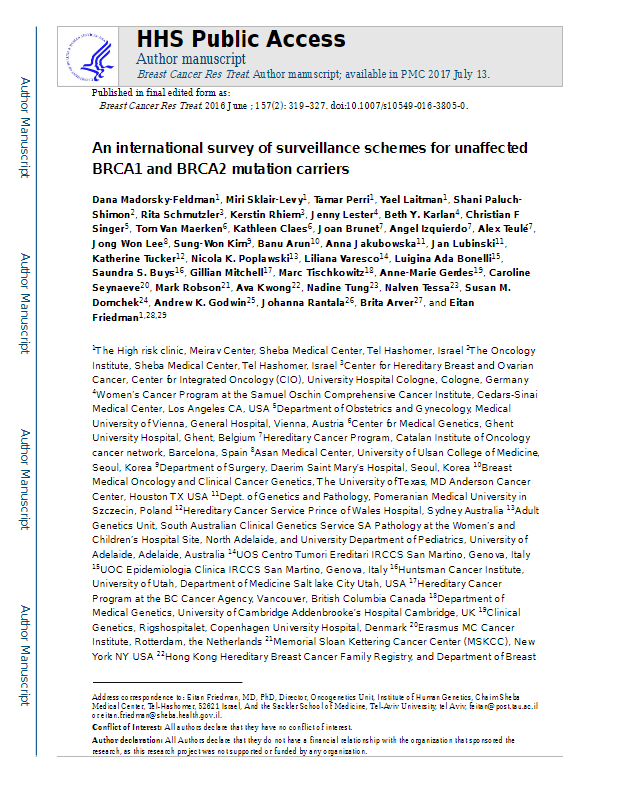 An international survey of surveillance schemes for unaffected BRCA1 and BRCA2 mutation carriers
-
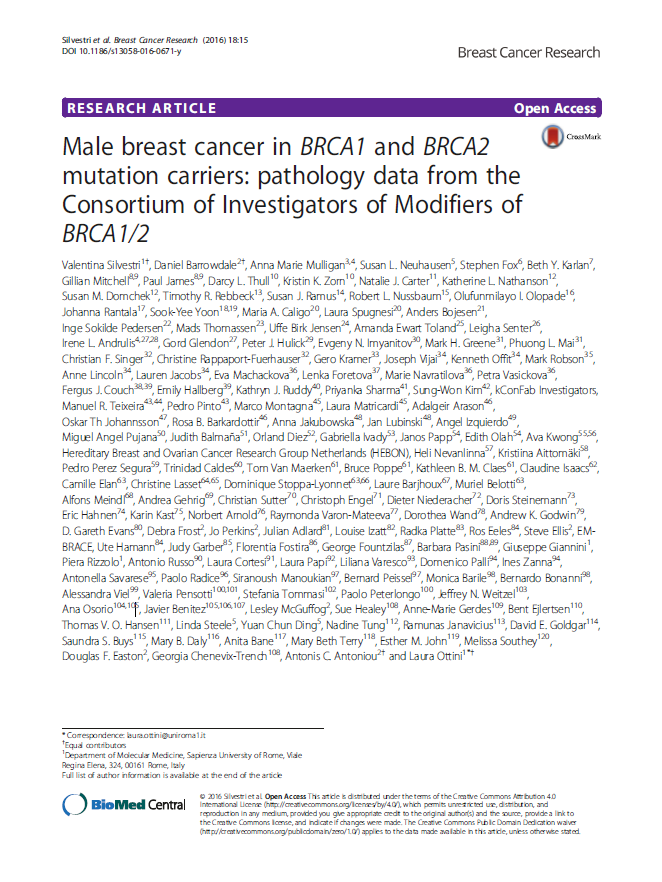 Male breast cancer in BRCA1 and BRCA2 mutation carriers: pathology data from the Consortium of Investigators of Modifiers of BRCA1/2
-
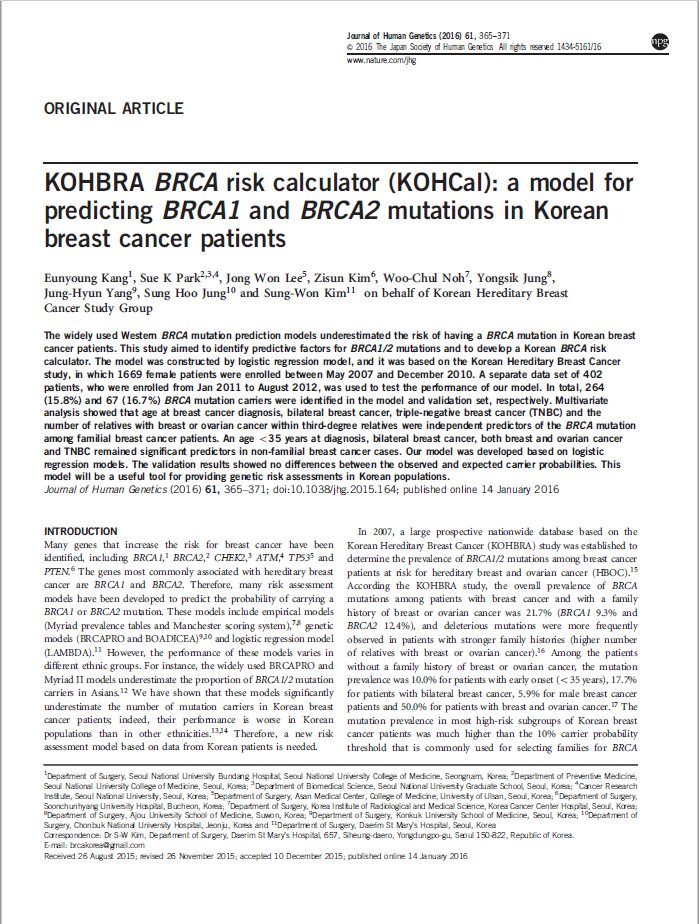 KOHBRA BRCA risk calculator (KOHCal): a model for predicting BRCA1 and BRCA2 mutations in Korean breast cancer patients


