


-
-
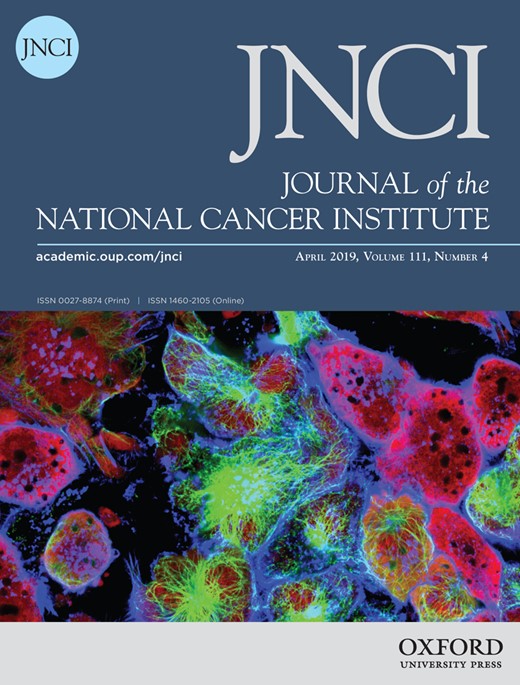
Journal of the National Cancer Institute Height and body mass index as Modifiers of breast cancer risk in BRCA1/2 mutation carriers: A Mendelian randomization study 2019.04.01.J Natl Cancer Inst. 2019 Apr1;111(4):350-364 논문 보기PurposeBRCA1/2 mutations confer high lifetime risk of breast cancer, although other factors may modify this risk. Whether height or body mass index (BMI) modifies breast cancer risk in BRCA1/2 mutation carriers remains unclear.MethodsWe used Mendelian randomization approaches to evaluate the association of height and BMI on breast cancer risk, using data from the Consortium of Investigators of Modifiers of BRCA1/2 with 14 676 BRCA1 and 7912 BRCA2 mutation carriers, including 11 451 cases of breast cancer. We created a height genetic score using 586 height-associated variants and a BMI genetic score using 93 BMI-associated variants. We examined both observed and genetically determined height and BMI with breast cancer risk using weighted Cox models. All statistical tests were two-sided.ResultsObserved height was positively associated with breast cancer risk (HR = 1.09 per 10 cm increase, 95% confidence interval [CI] = 1.0 to 1.17; P = 1.17). Height genetic score was positively associated with breast cancer, although this was not statistically significant (per 10 cm increase in genetically predicted height, HR = 1.04, 95% CI = 0.93 to 1.17; P = .47). Observed BMI was inversely associated with breast cancer risk (per 5 kg/m2 increase, HR = 0.94, 95% CI = 0.90 to 0.98; P = .007). BMI genetic score was also inversely associated with breast cancer risk (per 5 kg/m2 increase in genetically predicted BMI, HR = 0.87, 95% CI = 0.76 to 0.98; P = .02). BMI was primarily associated with premenopausal breast cancer.
Total : 35개 (page : 2/3)
-
 Association analysis identifies 65 new breast cancer risk loci
-
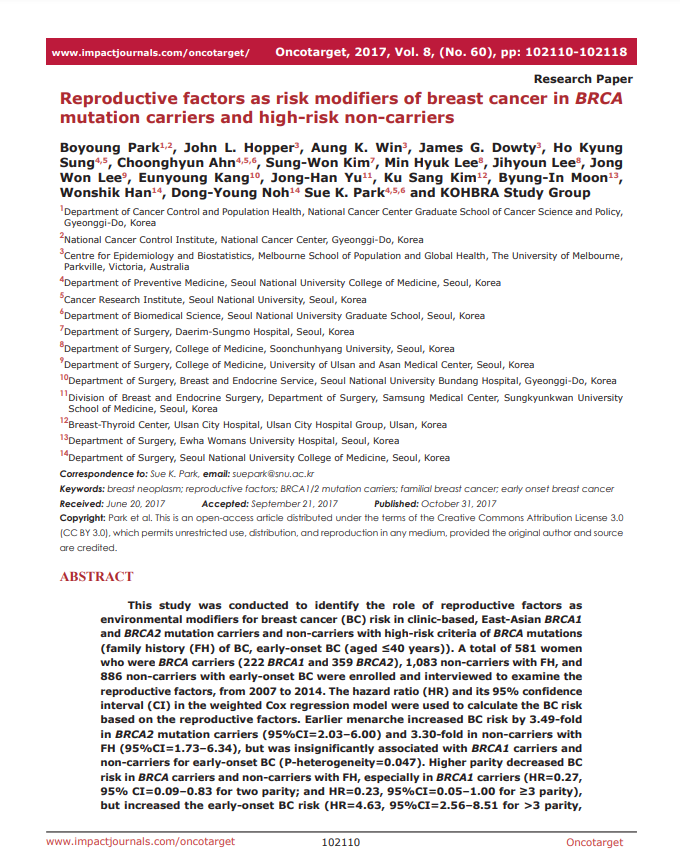 Reproductive factors as risk modifiers of breast cancer in BRCA mutation carriers and high risk
-
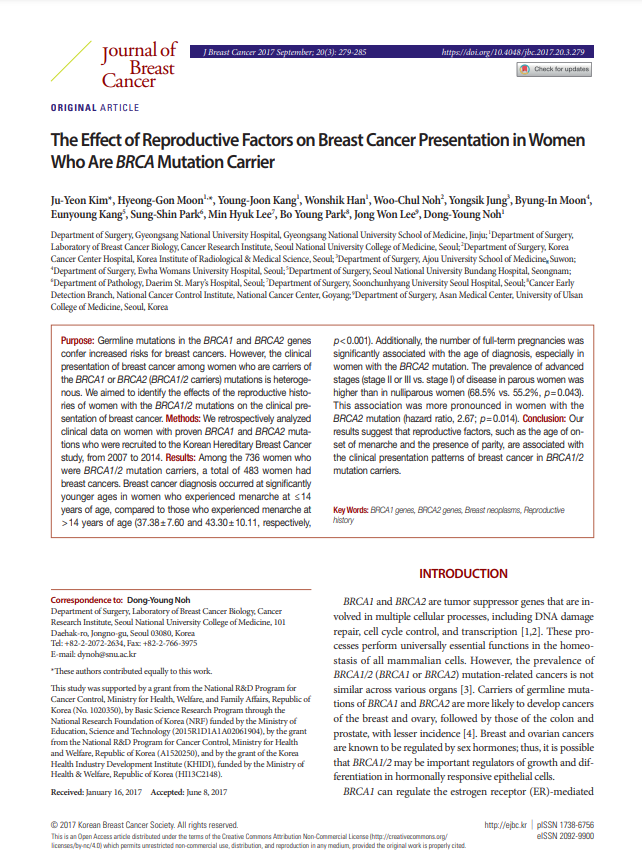 The Effect of Reproductive Factors on Breast Cancer Presentation in Women Who Are BRCA Mutation Carrier
-
 The Management Strategy of Benign Solitary Intraductal Papilloma on Breast Core Biopsy
-
 Prediction of Breast and Prostate Cancer Risks in Male BRCA1 and BRCA2 Mutation Carriers Using Polygenic Risk Scores
-
 Influence of the Angelina Jolie Announcement and Insurance Reimbursement on Practice Patterns for Hereditary Breast Cancer
-
 Suggestion of BRCA1 c.5339T>C (p.L1780P) variant confer from 'unknown significance' to 'Likely pathogenic' based on clinical evidence in Korea
-
 Identification of 12 new susceptibility loci for different histotypes of epithelial ovarian cancer
-
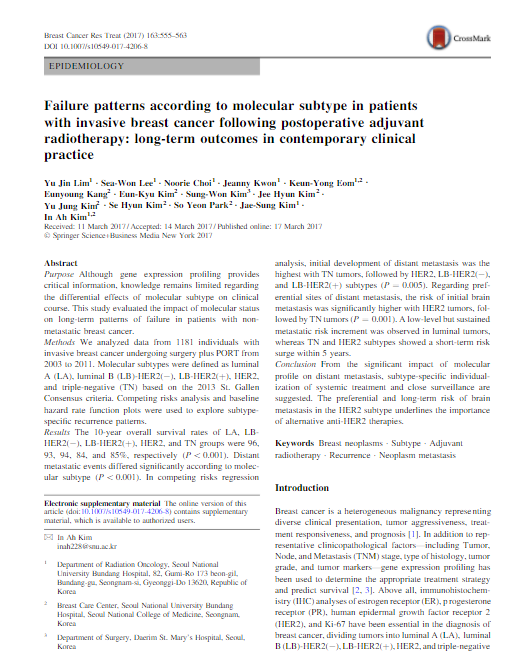 Failure patterns according to molecular subtype in patients with invasive breast cancer following postoperative adjuvant radiotherapy: long-term outcomes in contemporary clinical practice
-
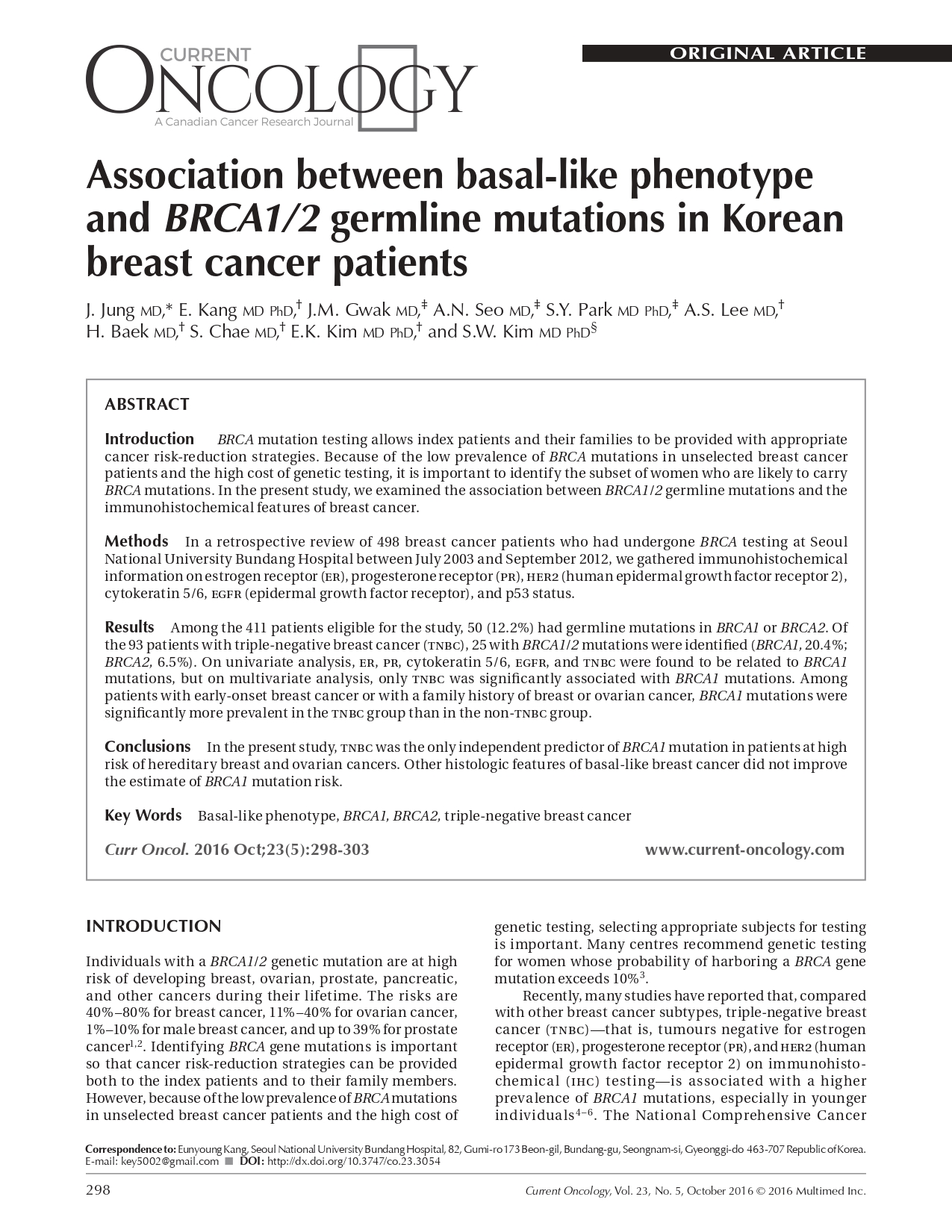 Association between basal-like phenotype and BRCA1/2 germline mutations in Korean breast cancer patients
-
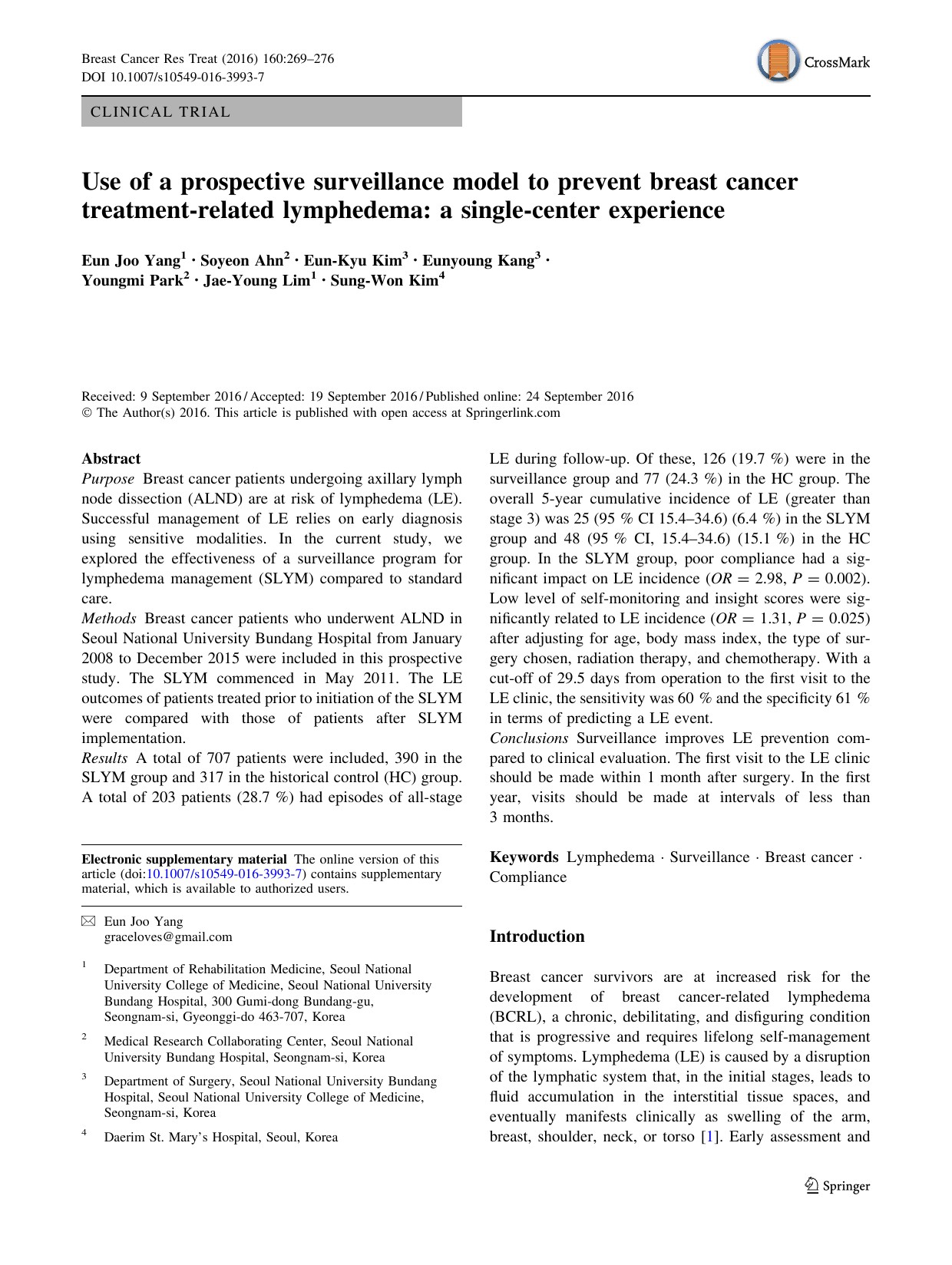 Use of a prospective surveillance model to prevent breast cancer treatment-related lymphedema: a single-center experience
-
 Reliability of Computer-Assisted Breast Density Estimation: Comparison of Interactive Thresholding, Semiautomated, and Fully Automated Methods
-
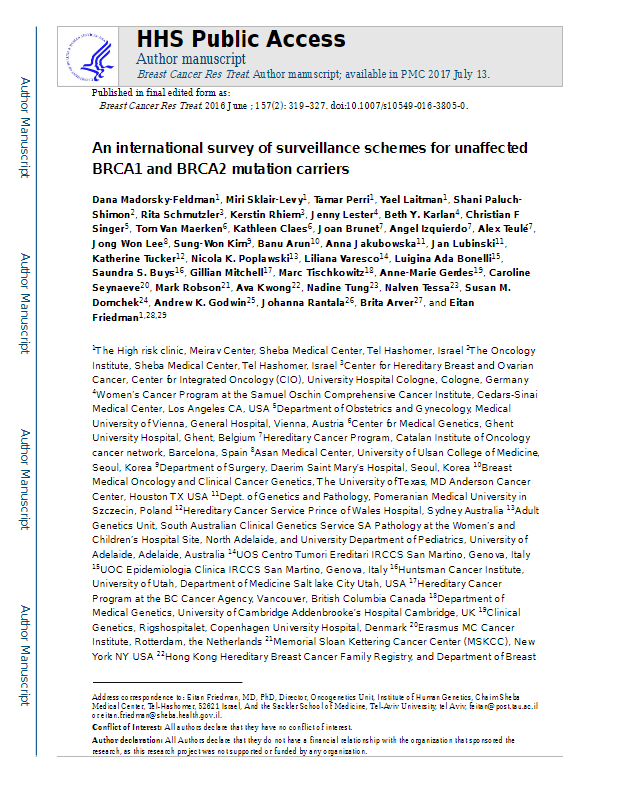 An international survey of surveillance schemes for unaffected BRCA1 and BRCA2 mutation carriers
-
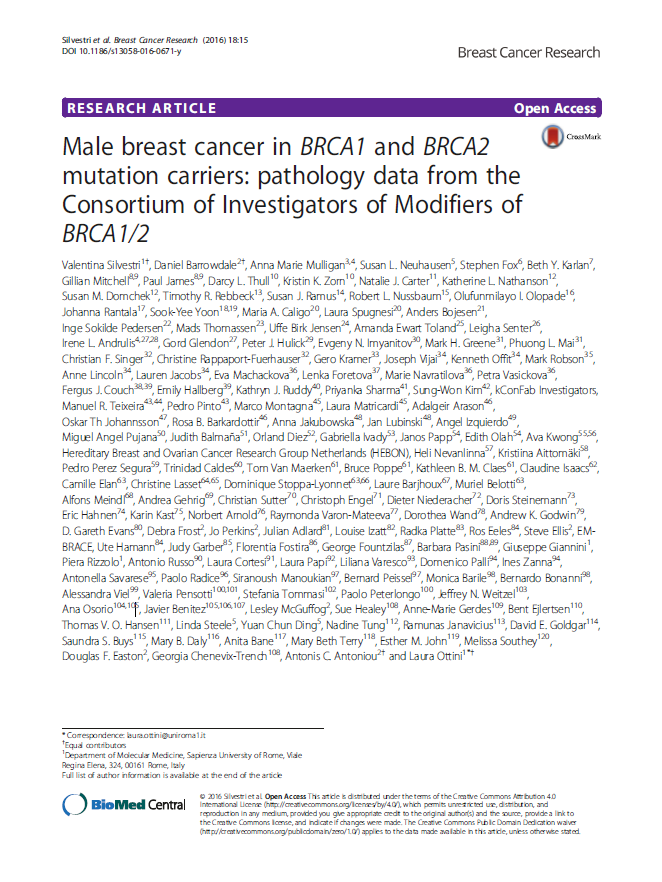 Male breast cancer in BRCA1 and BRCA2 mutation carriers: pathology data from the Consortium of Investigators of Modifiers of BRCA1/2
-
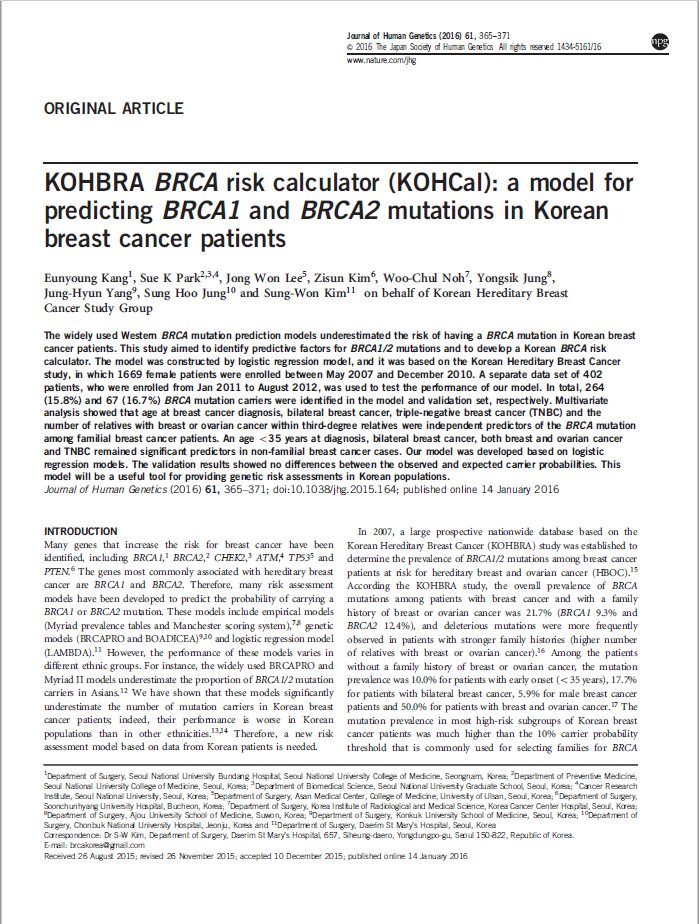 KOHBRA BRCA risk calculator (KOHCal): a model for predicting BRCA1 and BRCA2 mutations in Korean breast cancer patients


